




Knowledge base: Measuring IT sustainability
Key concepts, focus areas and measurement approaches to help you apply sustainable IT across your organisation.

The key terms and ideas that shape how IT emissions are measured and reduced.
Understand where emissions come from across your organisation, from direct operations and purchased energy to emissions generated throughout your supply chain.
Carbon neutral focuses on balancing emissions through reduction and offsetting. Net Zero prioritises reducing emissions as much as possible before addressing any remaining impact.
Embodied carbon is generated when technology is manufactured and delivered. Operational carbon is produced during the use of devices, infrastructure and services.
From product certifications to supplier assessments and reporting frameworks, these standards help organisations make more informed sustainability decisions.

Sustainability certification for IT products
Environmental and social sustainability criteria
Certification focused on energy efficiency
Sustainability assessment of suppliers and organisations
Environmental disclosure and reporting framework
Validation of science-based emissions reduction targets
Key areas across your IT estate where sustainability improvements deliver the greatest impact.
Laptops, desktops and peripherals often represent a large share of IT emissions. Extending refresh cycles, repairing devices and choosing energy‑efficient models can significantly reduce embodied carbon.
Cloud platforms can improve efficiency, but over‑provisioning, unused storage and inefficient workloads still drive emissions. Optimising usage reduces both environmental impact and cost.
Data centres consume large amounts of electricity and water. Efficiency metrics such as Power Usage Effectiveness (PUE) help identify opportunities to reduce energy and cooling demand.
Secure reuse, refurbishment and certified recycling prevent environmental harm, reduce waste and recover valuable materials while ensuring data security.
Supplier choices directly affect Scope 3 emissions. Sustainability credentials, science‑based targets and lifecycle transparency all play a role in reducing supply‑chain impact.
Supply chain emissions from devices, cloud services and vendors are often the largest contributor to IT carbon impact.
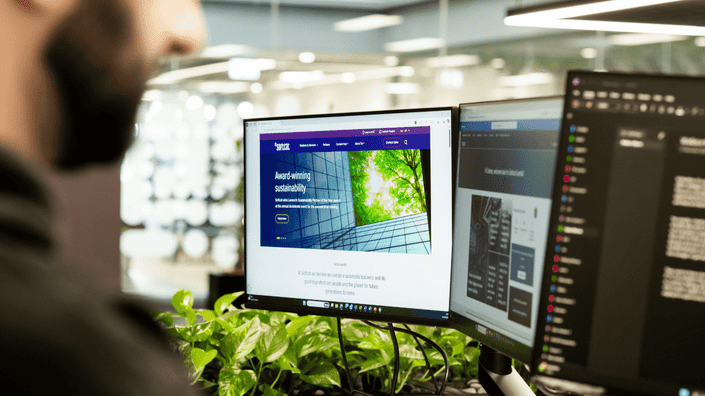

Understanding your IT footprint starts with good data. Measuring emissions, energy consumption and lifecycle impacts can help identify opportunities for improvement and support sustainability reporting.
Access your IT reporting tools in ECATCommon questions about measuring, reporting and improving IT sustainability
Why are Scope 3 emissions harder to track than Scope 1 and 2?
Scope 3 emissions sit within the supply chain, covering devices, cloud services and suppliers. This makes them harder to measure accurately and often dependent on third‑party data.
Which IT assets typically contribute the most emissions?
For many organisations, end-user devices, cloud services and data centre infrastructure account for a significant share of IT-related emissions, particularly when manufacturing impacts are included.
What metrics are commonly used to measure IT sustainability?
Embodied carbon refers to the greenhouse gas emissions generated during the extraction of raw materials, manufacturing, transportation and disposal of a product. For many IT products, a significant proportion of emissions occur before the device is ever used.
What are the most common challenges organisations face with sustainable IT?
Common challenges include limited visibility into supplier emissions, legacy infrastructure, inconsistent measurement approaches and competing budget priorities.
What is a Life Cycle Assessment (LCA)?
A Life Cycle Assessment (LCA) measures the environmental impact of a product across its entire lifecycle, from raw material extraction and manufacturing through to use, reuse, recycling and disposal. LCAs help organisations make more informed purchasing decisions by providing greater visibility into a product's environmental footprint.